Lenovo Legion Go S Review: A Bigger SteamOS Screen, but the Steam Deck Is Still Smoother
The SteamOS Legion Go S has an 8-inch 120Hz screen and a bigger battery than the Steam Deck OLED, yet reviewers still pick Valve's handheld. We explain why, and when Lenovo wins.
The verdict
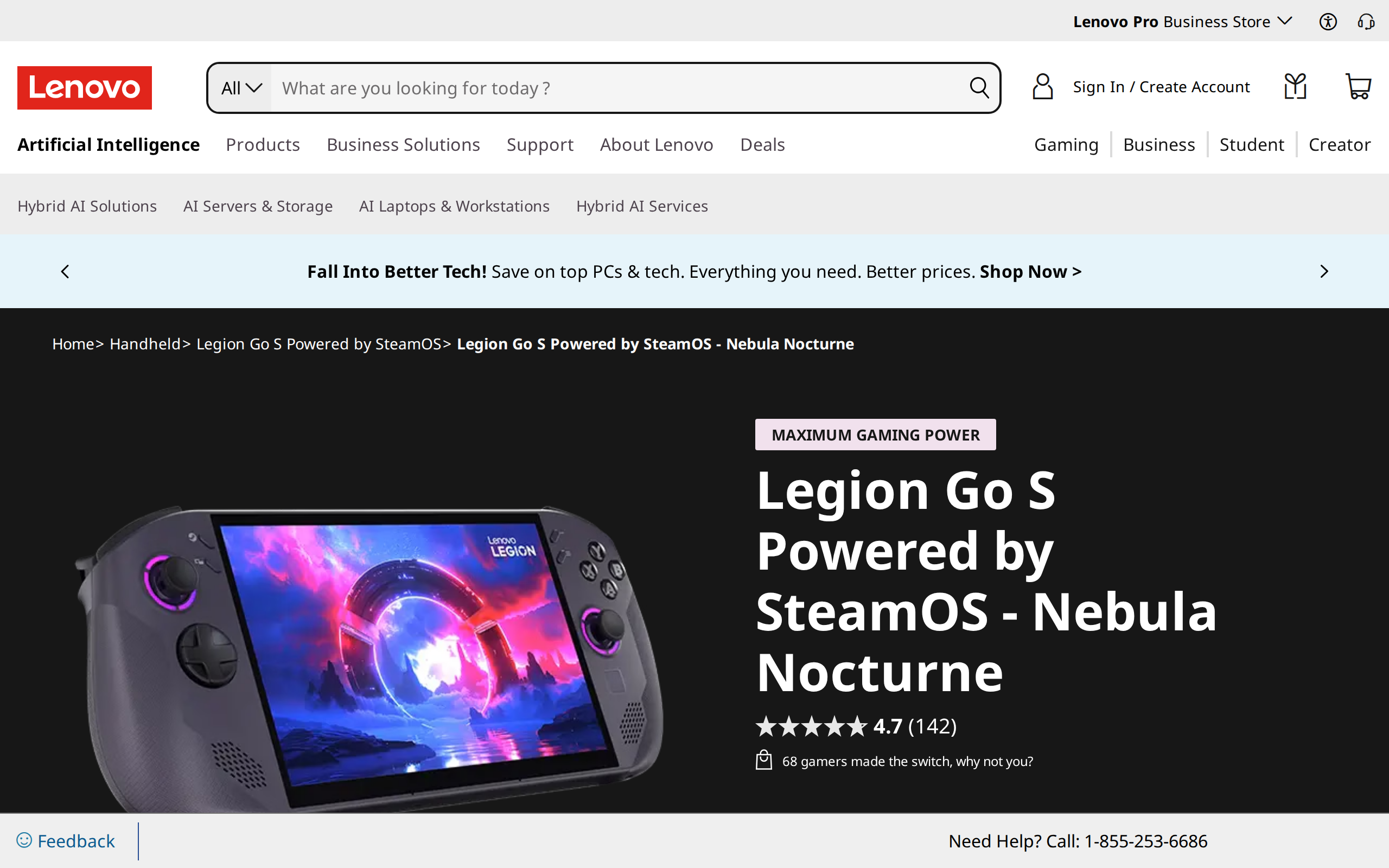
The Legion Go S with SteamOS has the bigger, sharper 120Hz screen and a larger battery, and it is a little faster. It also has a single rear paddle per side, no trackpads, a louder fan and younger Linux driver support. Priced near a Steam Deck OLED it is a fair alternative, but at $829.99 we would buy the Deck. Pick Lenovo only if you want the screen.
Best forPlayers who want an 8-inch 120Hz screen on SteamOS
What we liked
- 8-inch 1920x1200 LCD with 120Hz and variable refresh rate beats the Deck's 7.4-inch panel for size
- 55.5Wh battery is larger than the Deck OLED's 50Wh
- Runs 20 to 40 percent faster than a Steam Deck in some tests, per PCWorld
- SteamOS removes the Windows overhead that held the original Legion Go S back
What we did not
- Heavier, bulkier and louder than a Steam Deck, with weaker vibration motors
- One rear paddle per side and no trackpads, where the Deck has two buttons and two pads
- SteamOS driver support on Lenovo hardware is newer and less proven than on the Deck
- Pricing is confusing: listings range from $499.99 to $829.99 depending on the configuration
Buy a Legion Go S for its screen. Everything else about it makes the case for the Steam Deck OLED, which is the awkward position a rival is in when it shows up three years late to the party it is trying to crash.
What the hardware gets right
Start with the good part. The Legion Go S has an 8-inch 1920x1200 LCD that runs at up to 120Hz with variable refresh, against the Deck OLED's 7.4-inch 1280x800 OLED at 90Hz. Its battery is 55.5Wh, ahead of the Deck's 50Wh. On paper it is the bigger, sharper, longer-lasting handheld.
The chip is an AMD Ryzen Z2 Go (Zen 3, four cores) in the SteamOS base model, with 16 GB of memory and 512 GB of storage. PCWorld's comparison puts it 20 to 40 percent faster than a Steam Deck in games. Other tallies are tighter: one comparison measured Cyberpunk 2077 at 1080p low at 26.5 fps on the Lenovo and 25.0 fps on the Deck, a 5.8 percent gap. Call it a modest speed edge that depends heavily on the game.
Why paper specs do not win here
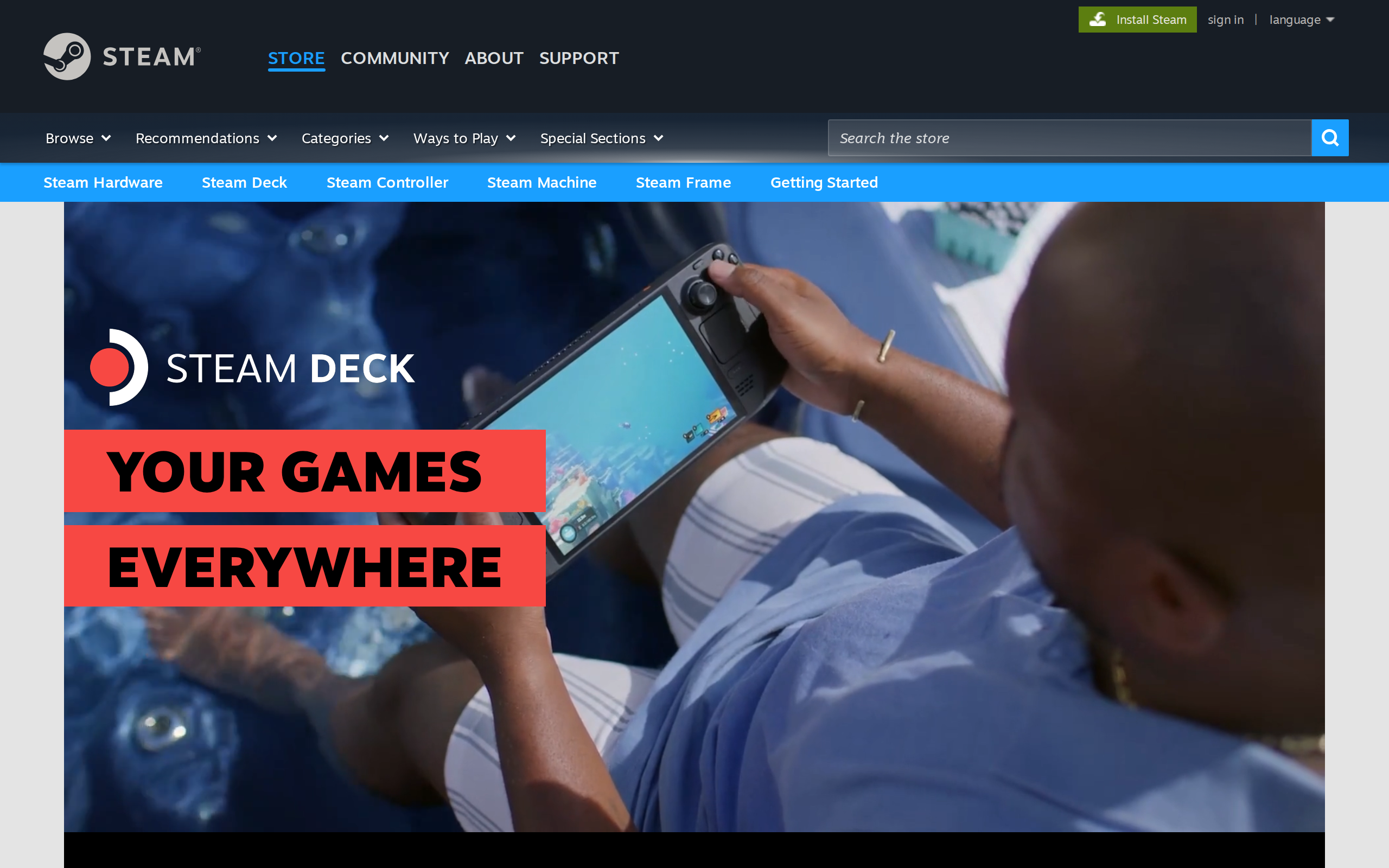
The reasons reviewers still say Deck are all about hands and software. PCWorld calls the Legion "bigger and chunkier" and "louder", with weaker vibration motors than Valve's. It has one rear paddle per side where the Deck has two buttons plus larger trackpads, and no trackpads at all.

Trackpads matter more than they sound. Mouse-driven strategy games and menu-heavy PC titles are the library that SteamOS exists to open up, and without a pad you are leaning on touch or a stick. If you play shooters and action games with a gamepad anyway, this stops mattering.
Software is the bigger worry. The Deck has years of SteamOS tuning behind it. PCWorld flagged Linux driver support on the Lenovo as "still a bit of a question mark", and said the Deck feels smoother with fewer hiccups. That will improve, but we are reviewing what ships.
Specs
- Processor (SteamOS base model)
- AMD Ryzen Z2 Go, Zen 3, 4 cores
- Memory
- 16 GB (base model)
- Storage
- 512 GB (base model)
- Display
- 8-inch 1920x1200 LCD, 120Hz, VRR, touch
- Battery
- 55.5Wh
- Operating system
- SteamOS (Windows 11 version also sold)
- Rear controls
- One paddle per side
- Price range
- $499.99 at launch for the base SteamOS model, up to $829.99 for the top listing