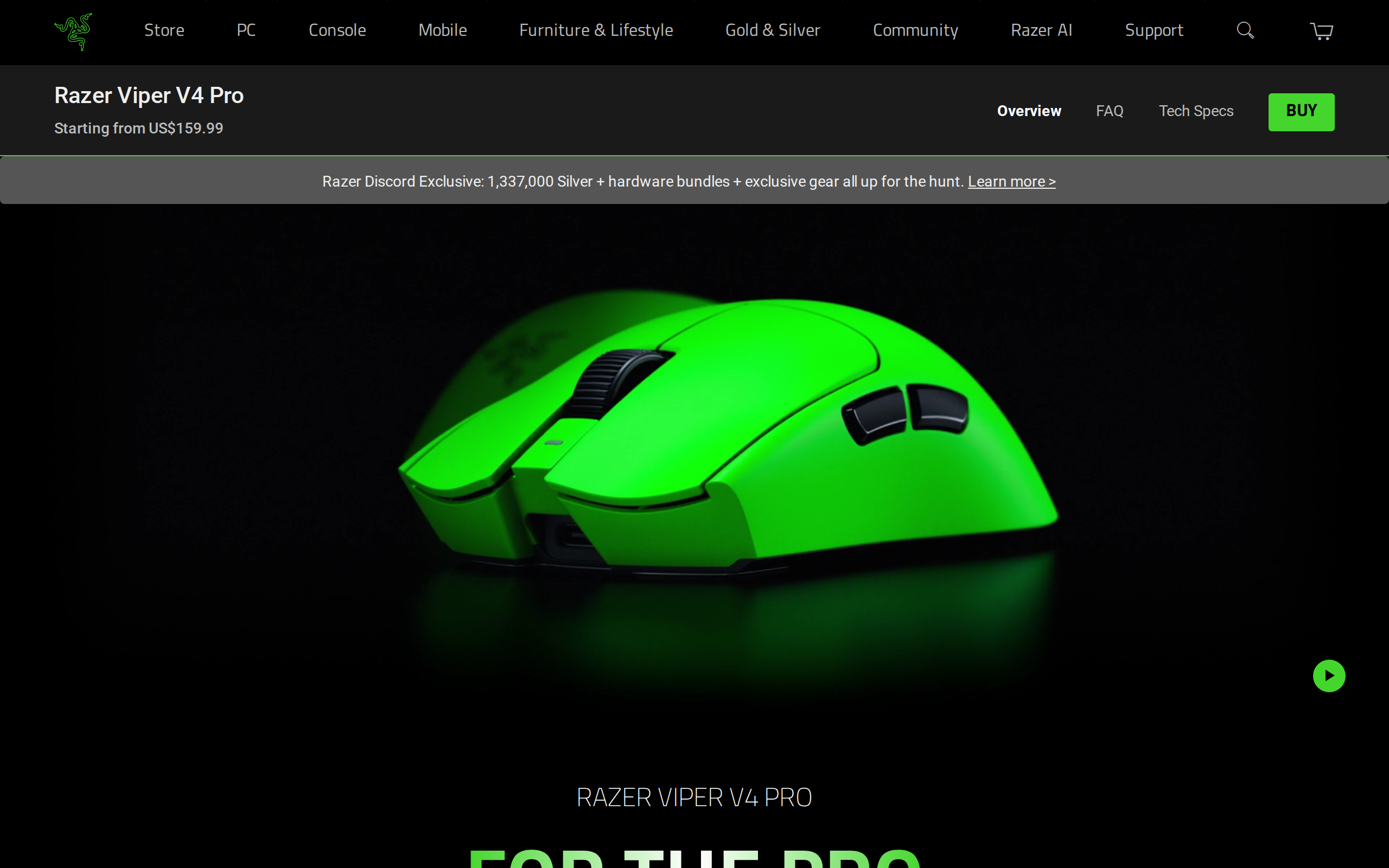
Razer Viper V4 Pro Review: 49 Grams for Fingertip and Claw Grips
At 49 g the Viper V4 Pro is among the lightest serious wireless mice with a proper symmetrical shell. We looked at what $159.99 buys, what 8000Hz costs in battery, and who should look at the Logitech instead.
The verdict
The Viper V4 Pro is the mouse to buy if you play with a claw or fingertip grip and want the lowest weight that still feels like a real shell. At 49 g it is 11 g lighter than the Logitech G Pro X Superlight 2, with a faster sensor and a sharper shape. Battery life at 8000Hz and loud clicks hold it back.
Best forClaw and fingertip grip players chasing the lightest wireless mouse
What we liked
- 49 g (50 g in white), far lighter than the 60 g Logitech rivals
- Right-handed symmetrical shape built for claw and fingertip grips
- Focus Pro 50K Gen-3 optical sensor with 1 DPI steps
- True 8000Hz wireless polling through the HyperPolling dongle
What we did not
- Battery life drops sharply at 8000Hz, well short of the 180 hour headline
- Main clicks are louder than the Logitech's, per comparison testing
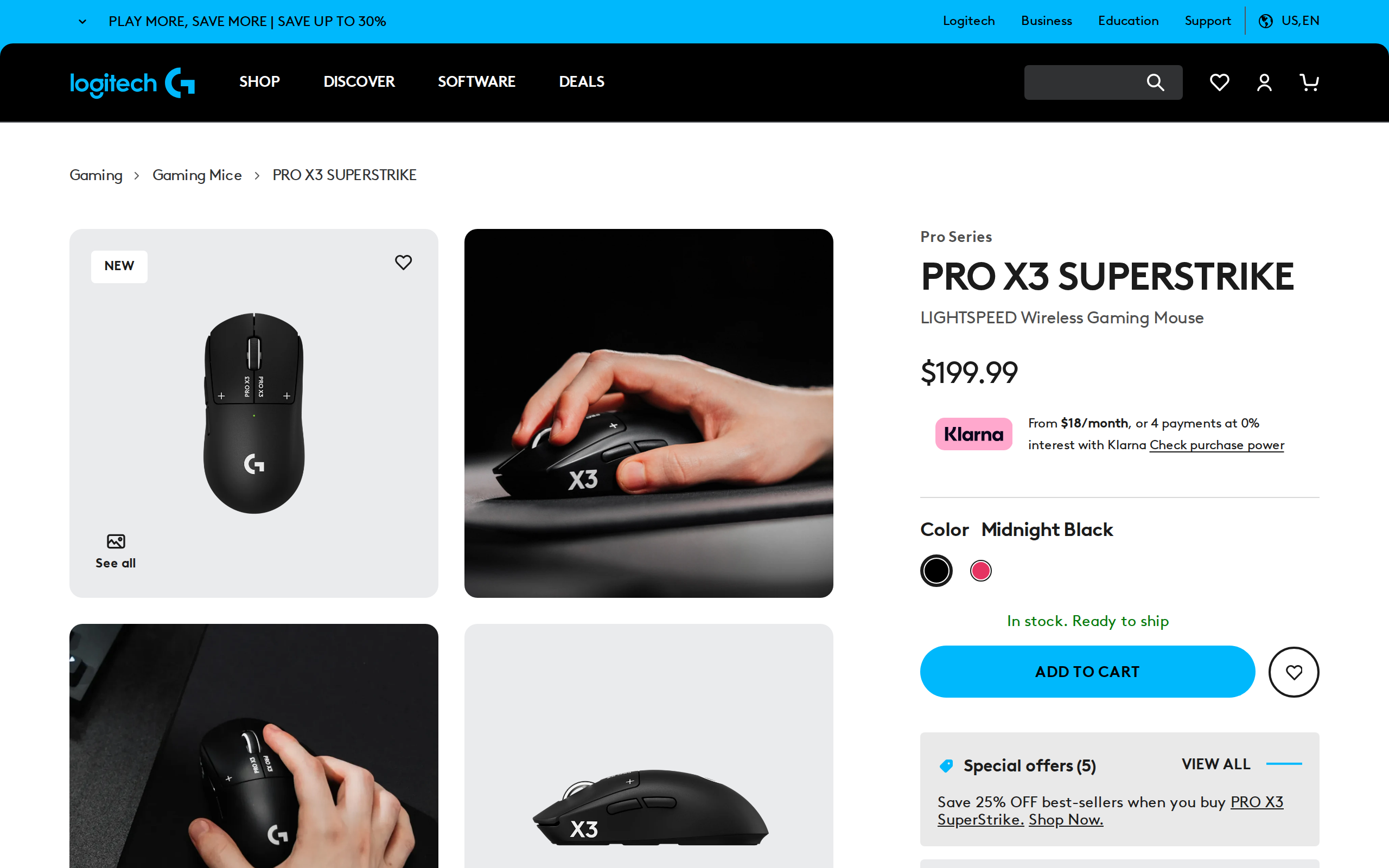
- Fixed optical clicks, where the Superstrike offers adjustable ones
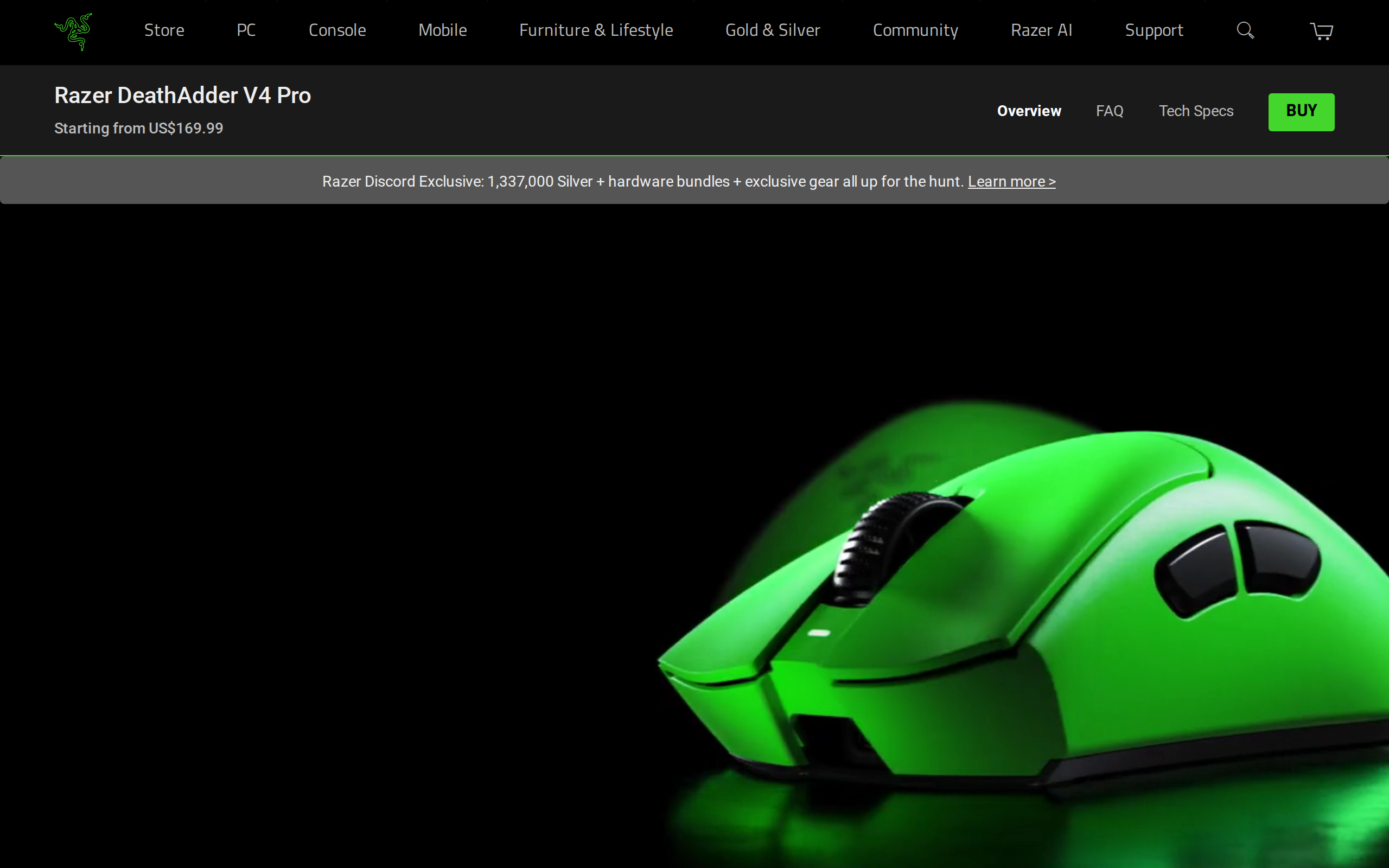
- Palm grip users will find the shape small and should look at the DeathAdder
Every few years a mouse maker proves that the last weight record was not the floor. The Viper V4 Pro weighs 49 g, and the thing worth asking is what it gives up to get there.
Who this shape is for
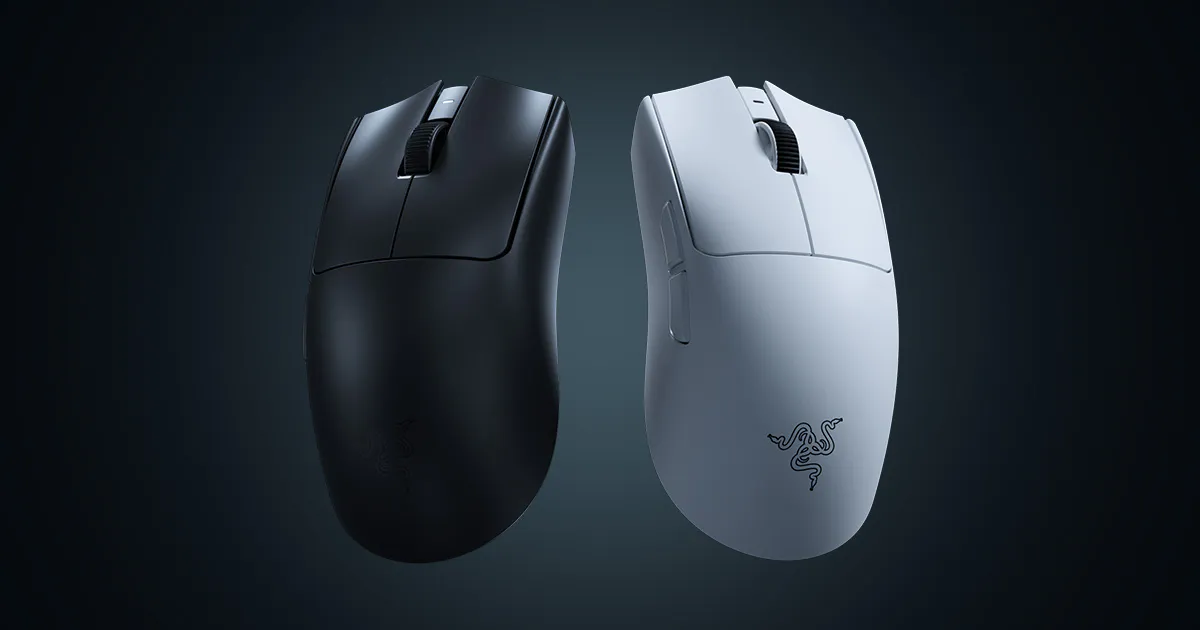
Razer calls it a right-handed symmetrical shape optimised for claw and fingertip users, and the description fits. There is no thumb rest sculpted into the left side, so the mouse works as a small, flat-sided tool you steer with your fingertips. A mouse like this suits low sensitivity wrist flicks and tiny aim corrections, the things shooter players practise.
Palm grip users should look away. The shell is small, and the rest of Razer's line is built for you instead: the DeathAdder V4 Pro, which we reviewed separately, is the one for large hands.
What 49 grams really means
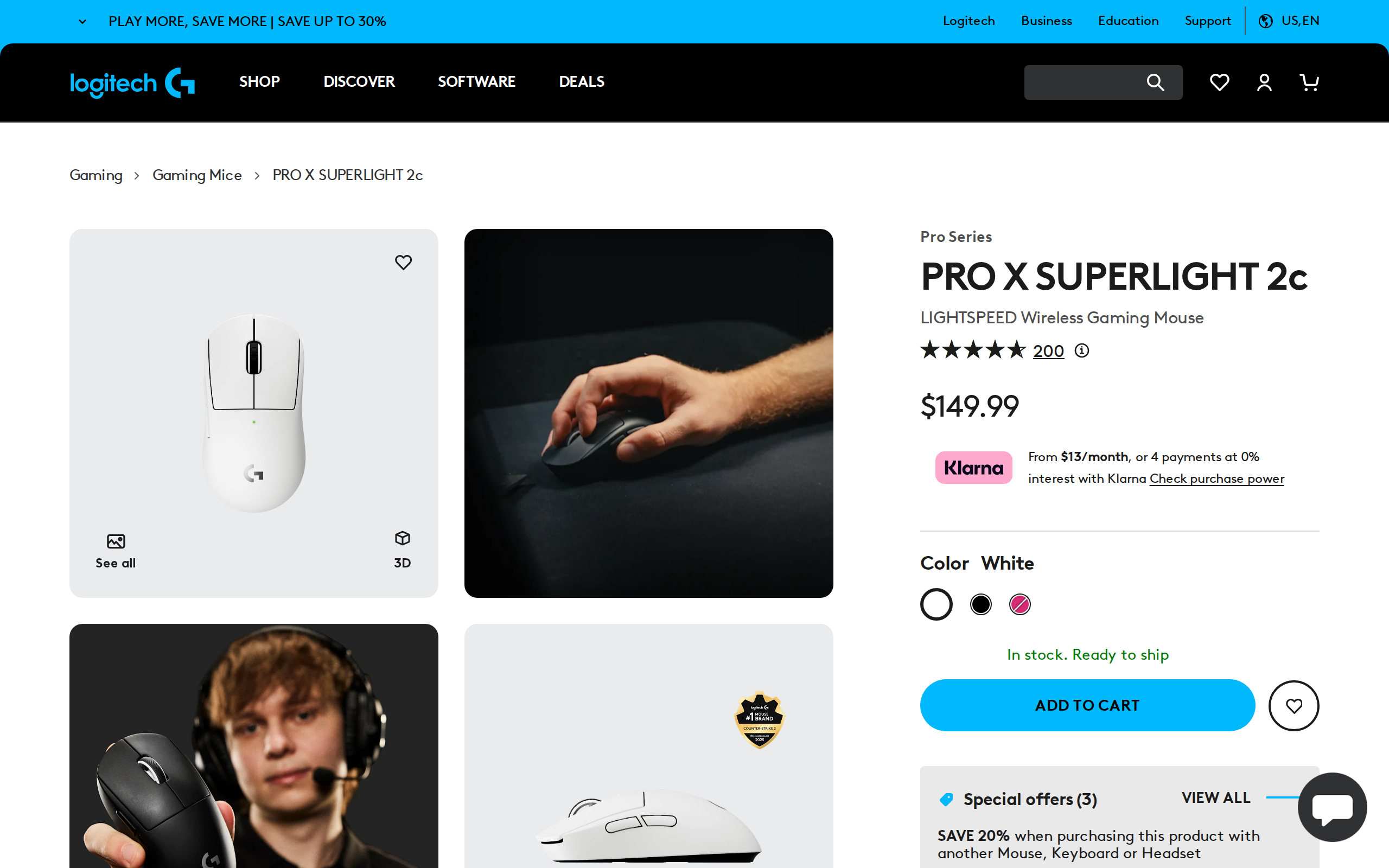
Razer says the shell is 49 g, or 50 g in white. The comparison that matters is with Logitech: the Superlight 2 and the Superstrike are both listed at 60 g, so the Razer is 11 g lighter, about 18 percent. Solder Magazine's matchup puts it as 49 g with fixed optical clicks against 60 g with configurable ones.
Does 11 g change your aim? For many players the answer is a small yes in the first week and no after a month. If you swipe fast at low sensitivity, less mass to stop makes the mouse feel quicker. If you already like a 60 g mouse, you will not be missing anything.
The sensor and the speed numbers
The Focus Pro 50K Gen-3 optical sensor goes to 50,000 DPI, 930 IPS and 90 G, and Razer lets you change DPI in single steps. You can set lift-off and landing distances across up to 26 levels in Synapse. In practice nobody needs 50K DPI. What you want is clean tracking at 800 or 1600, and that is what optical sensors at this price deliver.
Razer claims motion latency as low as 0.36 ms and a 55 percent latency cut over the last generation, along with true 8000Hz wireless polling through a redesigned HyperPolling dongle. The dongle is bigger than before, with a taller antenna and a weighted base that stays put on the desk. Set it up with the dongle plugged straight into the PC, as Razer advises.
Specs
- Weight
- 49 g (50 g for the White Edition)
- Shape
- Right-handed symmetrical, claw and fingertip
- Sensor
- Razer Focus Pro 50K Gen-3 optical, 50K DPI, 930 IPS, 90 G
- Wireless
- HyperSpeed Gen 2, true 8000Hz with HyperPolling dongle
- Latency claim
- Motion latency as low as 0.36 ms, per Razer
- Switches
- Razer Optical Mouse Switches Gen-4, optical scroll wheel
- Battery claim
- Up to 180 hours, per Razer, at lower polling rates
- DPI steps
- Adjustable in single DPI increments
- Lift-off distance
- Up to 26 levels in Synapse
- Price
- $159.99