ASUS ROG Azoth 96 HE Review: The Best-Typing Hall Effect Board, at a Price That Needs a Reason
The Azoth 96 HE types better than most Hall effect keyboards, by the reviews we read, and its 1.47-inch OLED is a fun extra. At $359.99 list, only one kind of buyer should pay it.
The verdict
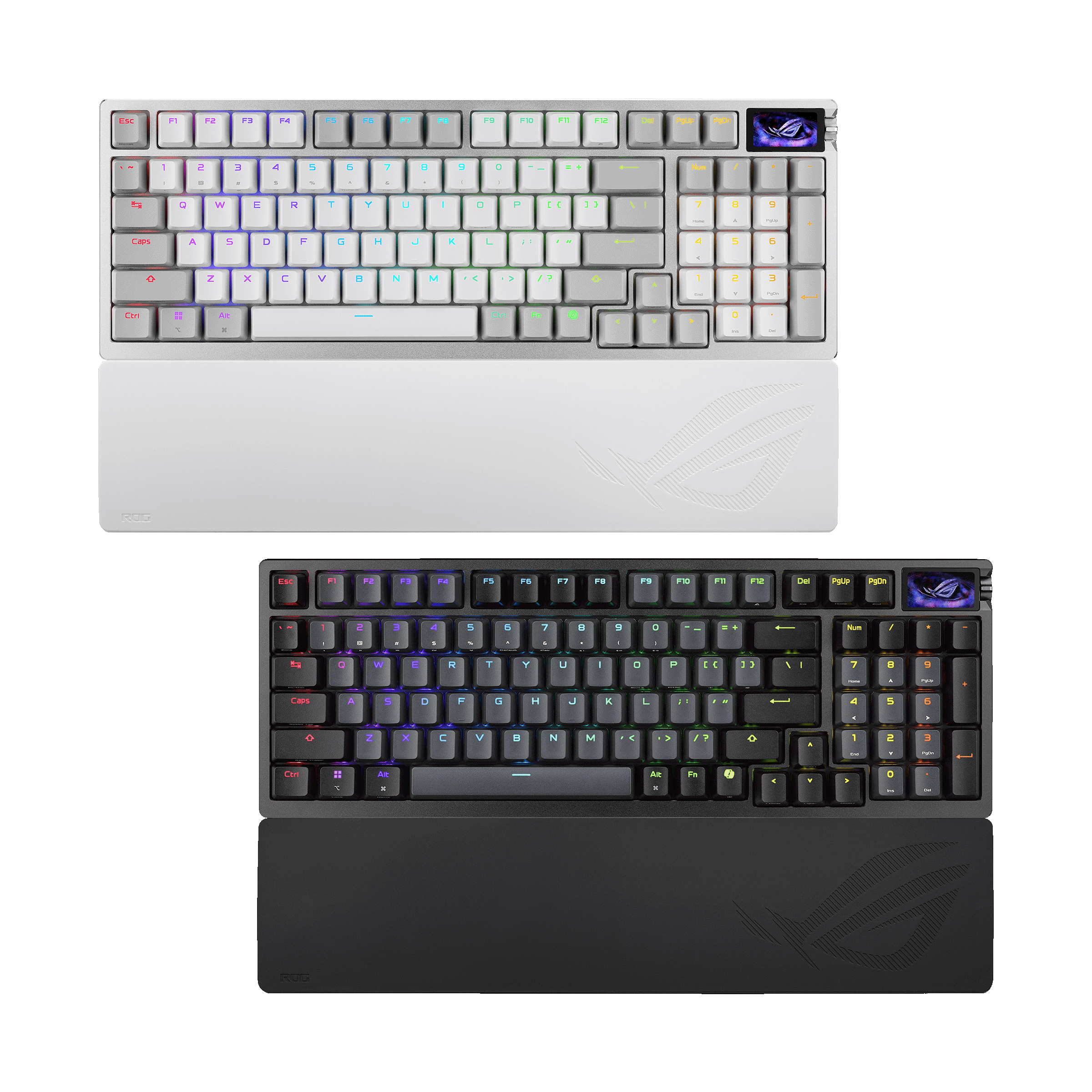
The Azoth 96 HE is the nicest Hall effect keyboard to type on, with a dense metal frame, six layers of dampening and a screen that earns its place on a desk. Gaming speed is on par with cheaper boards, so you are paying for feel. Buy it if you type all day and game at night. Everyone else should save $100 or more.
Best forPeople who type all day and also play competitive games
What we liked
- Deep, muted typing sound with no ping, thanks to six dampening layers
- Actuation adjustable from 0.1 to 3.5 mm in 0.01 mm steps, with rapid trigger
- Tri-mode wireless with up to 8000 Hz polling on 2.4 GHz and USB
- Hot-swappable switches and a metal top frame that feels dense, with no flex
- 1.47-inch OLED and knob are useful for volume, battery and connection checks
What we did not
- $359.99 list price is far above Wooting and Corsair Hall effect boards
- Armoury Crate software is heavy, though the Gear Link web app helps
- The OLED adds cost without making you faster in any game
- 96% layout with a wrist rest takes a lot of desk space for a compact board
Most Hall effect keyboards are sold on speed. The ROG Azoth 96 HE is sold on something else: how it feels when you are not gaming. The fair way to judge it is to split your week the way many owners do: typing by day, shooters by night.
What you are paying for
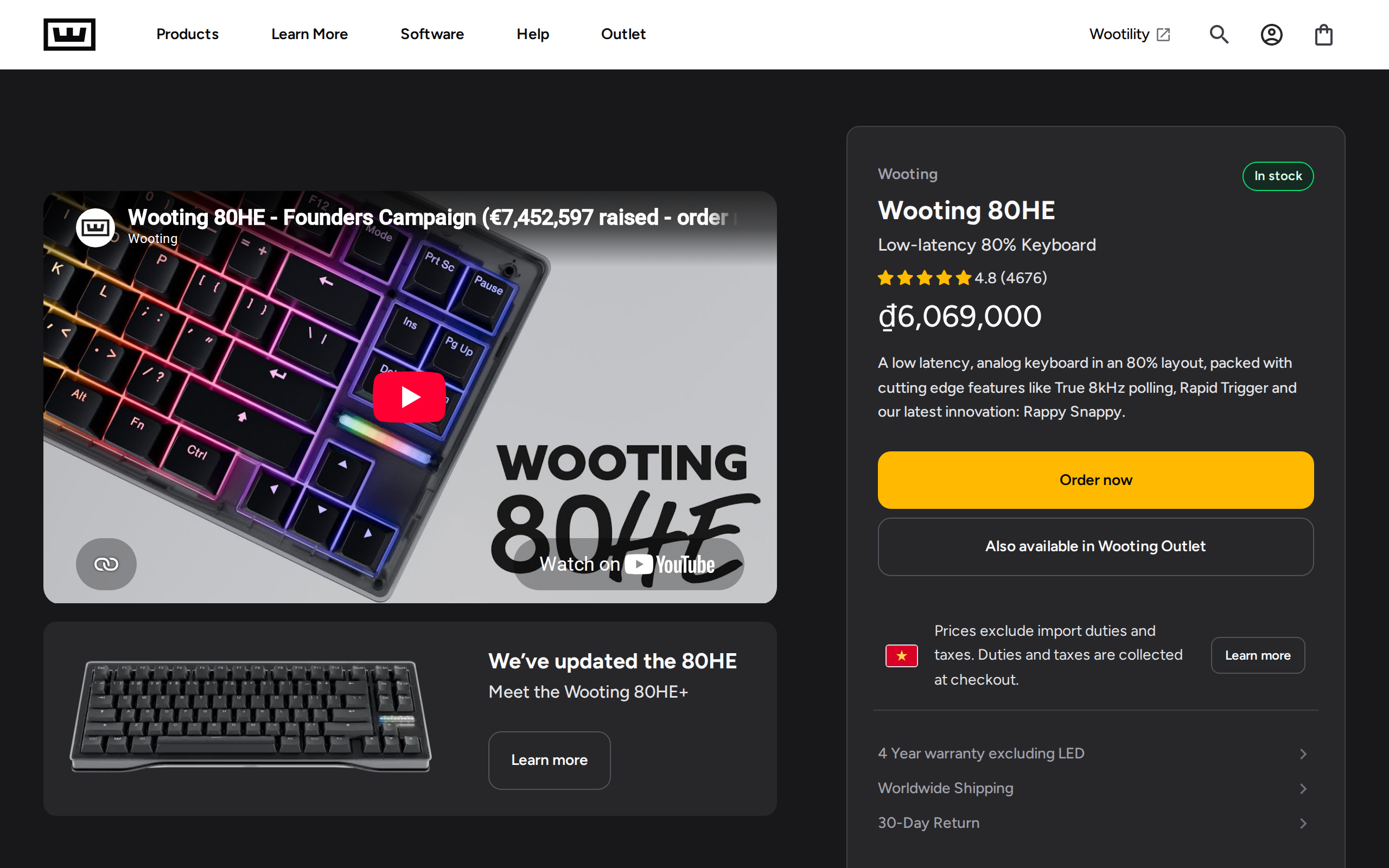
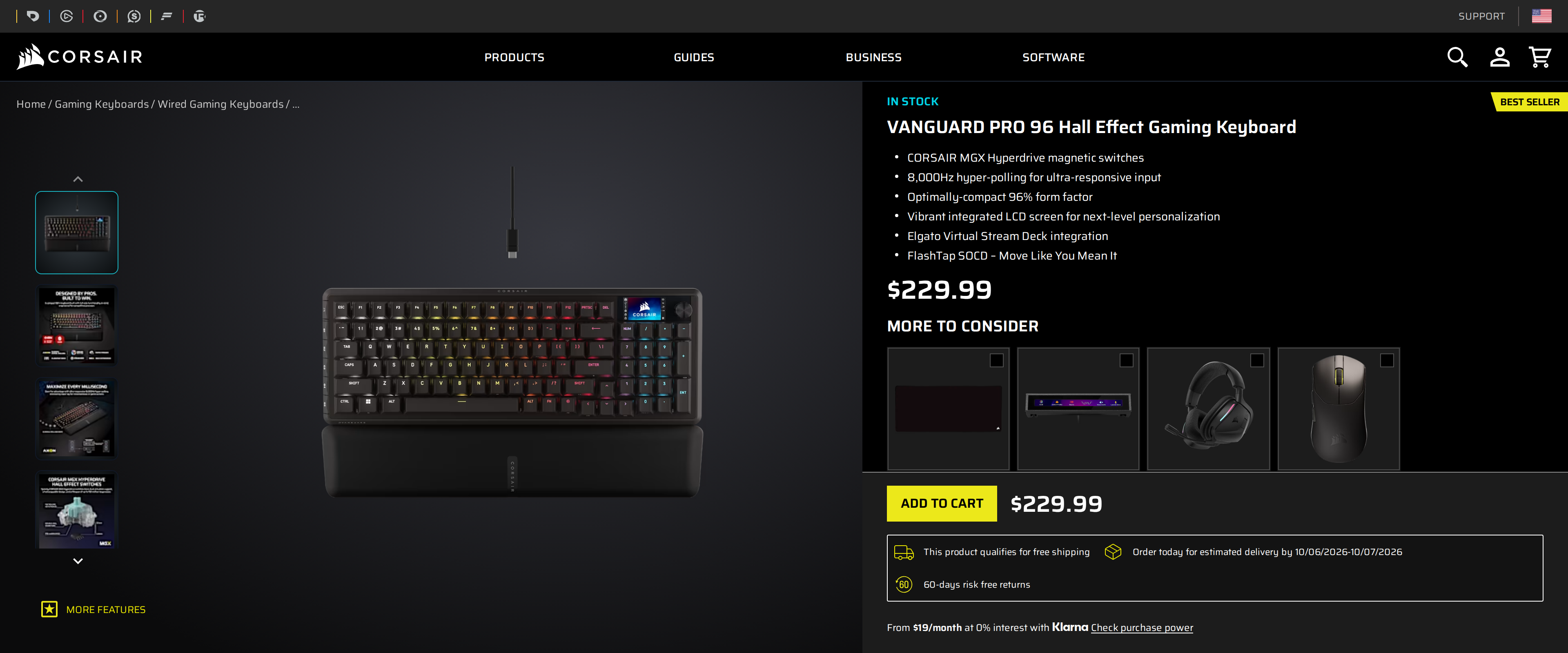
Start with the number. ASUS lists the Azoth 96 HE at $359.99, and when we checked, its own store had it at $308.99. That is still well above the Hall effect boards most people compare it with. The Wooting 80HE and the Corsair Vanguard Pro 96 both sit lower, and neither gives up much on raw gaming speed.
So the question is simple: what does the extra money buy? Three things. A heavier, quieter build. A small screen. And a typing feel that none of the cheaper boards quite match.
The sound is the whole argument
ASUS stacks six dampening layers inside the case: four of PORON foam, one of IXPE and one of silicone, according to the spec page. Under a metal top frame, that makes a board that sounds deep and slightly muted. Gaming Australia called it "thocky" without being mushy, and GamesRadar likewise praised a smooth, rich keypress with no woolly pressure. The dampening is the reason.
The ROG HFX V2 switches are light. ASUS quotes 32 gf to start the press and 49 gf at the bottom of the 3.5 mm of travel. That is lighter than many linear mechanical switches, so long sessions are easy on the fingers. If you like a firm, tactile bump, this is not your board. If you like smooth, it is the best of the magnetic bunch.
It is also heavy, in a good way. Reviewers describe a dense, flex-free body, and it stays put on the desk when you hammer a key.
Does the Hall effect part keep up?
Yes, and this is where the Azoth does not need to win. Actuation is adjustable from 0.1 mm to 3.5 mm in 0.01 mm steps, per ASUS, and rapid trigger is supported. Polling goes up to 8000 Hz over the ROG SpeedNova wireless link and over USB. None of the reviews we read found it slower in games than cheaper rapid trigger boards.
Specs
- Layout
- 96%, with numpad and OLED
- Switches
- ROG HFX V2 magnetic, hot-swappable
- Travel
- 3.5 mm
- Actuation range
- 0.1 to 3.5 mm, 0.01 mm steps
- Force
- 32 gf initial, 49 gf total
- Polling rate
- Up to 8000 Hz (wireless and wired)
- Connectivity
- ROG SpeedNova 2.4 GHz, Bluetooth, USB-C
- Display
- 1.47-inch full-colour OLED touchscreen
- Dampening
- Six layers (4 PORON, 1 IXPE, 1 silicone)
- Software
- Gear Link (web), Armoury Crate
- List price
- $359.99