Razer BlackShark V3 Pro Review: The Esports Headset With the Better Mic
The BlackShark V3 Pro costs $249.99 and aims at players who care about a clean mic and readable footsteps. We checked the claims, the 70-hour battery figure, and how it stacks up against the Arctis Nova Pro.
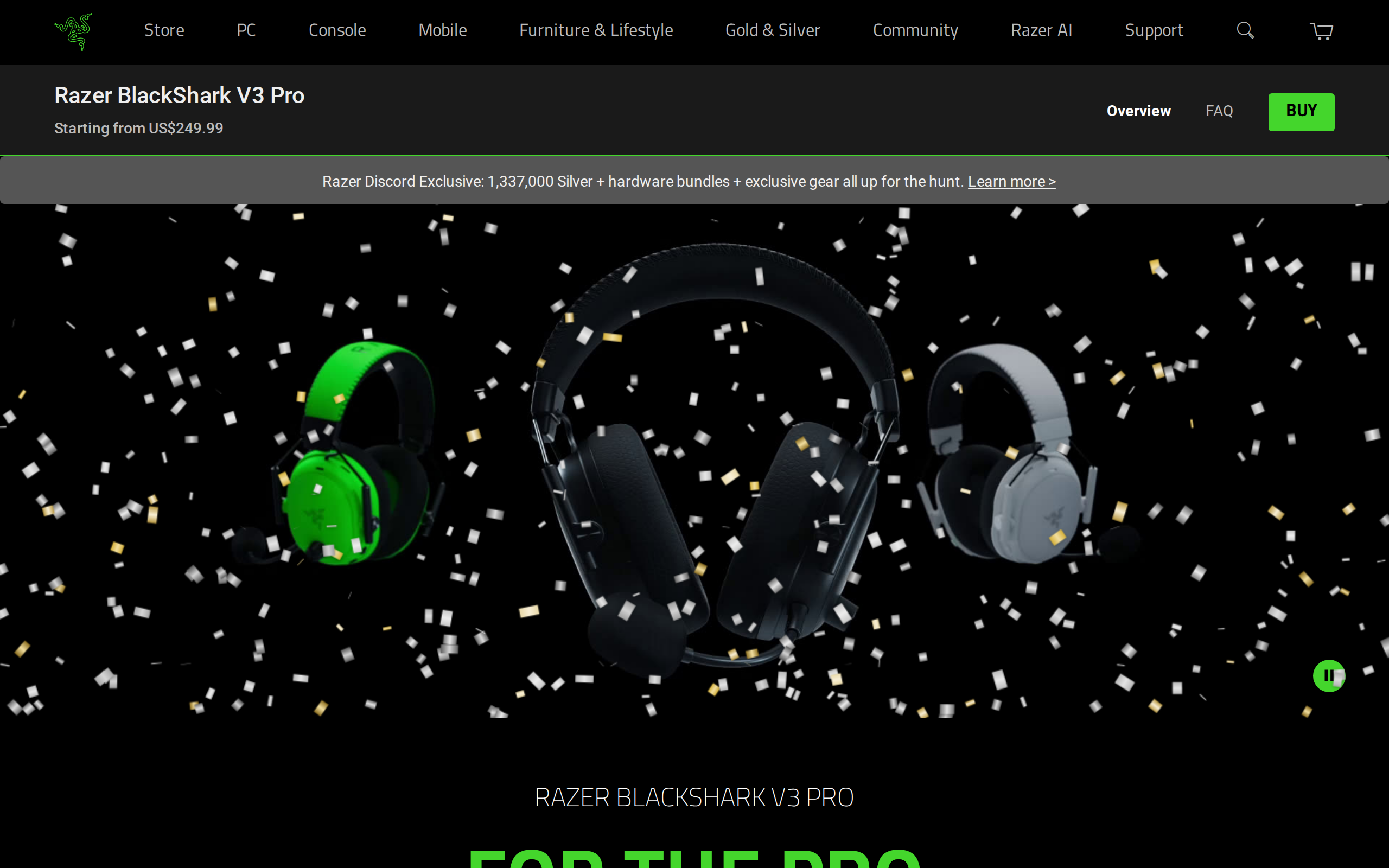
The verdict
This is the wireless headset we would hand to a competitive player first. The mic is clear, the 2.4 GHz link is fast, battery life is excellent, and the tuning keeps footsteps and gunfire easy to place. The ANC is only decent, music is less exciting than on a bass-heavy rival, and $249.99 is not cheap.
Best forCompetitive PC and console players who talk a lot on comms
What we liked
- Detachable 12 mm HyperClear mic with a unidirectional pickup pattern
- Up to 70 hours per charge, and about 6 hours from a 15-minute top-up
- Tuning keeps footsteps and distant gunshots easy to locate in shooters
- 2.4 GHz, Bluetooth and USB, with simultaneous game and phone audio
What we did not
- Hybrid ANC is decent but not class-leading, and cuts battery to about 40 hours
- Music has less bass and excitement than the SteelSeries rival
- $249.99 puts it in flagship territory, with a good wired headset costing far less
- Mic noise rejection is not the strongest in busy rooms
If you only care about hearing a flanker before he hears you, and about being understood when you call him out, the BlackShark V3 Pro is aimed squarely at you. Everything else in the box is a bonus.
The pitch is footsteps and a voice
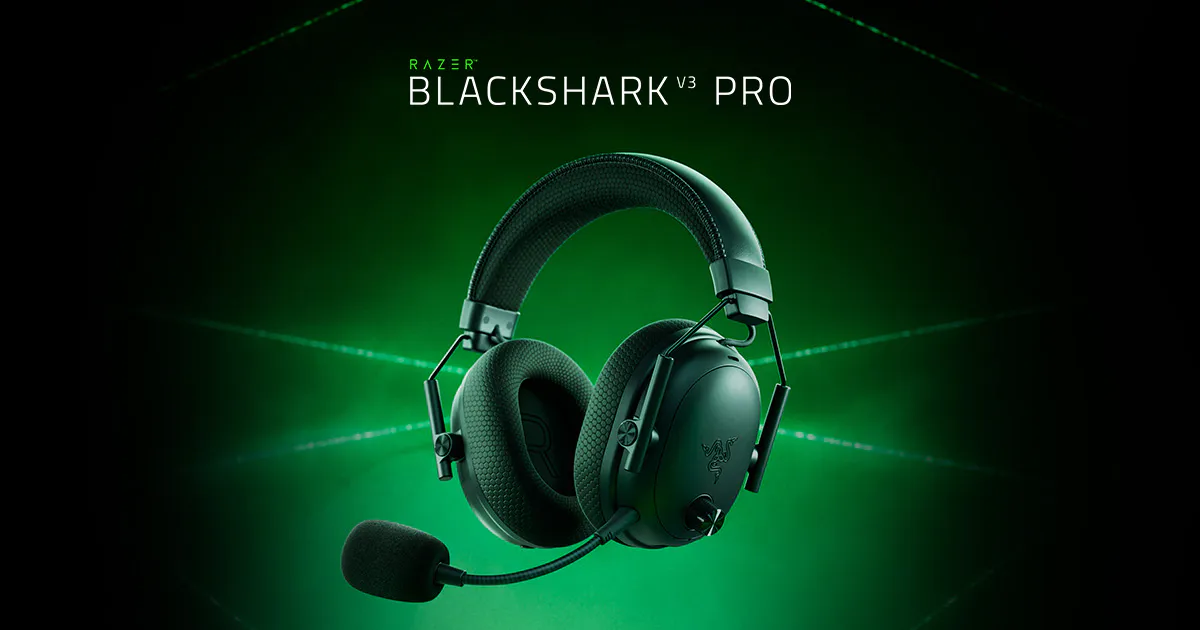
Razer has made esports headsets for years, and the V3 Pro keeps the formula: a lightweight wireless design, a mic that points at your mouth and nothing else, and a sound profile built around positioning rather than thump. The drivers are 50 mm TriForce Bio-Cellulose, now in a second generation, and Razer ships game-specific EQ profiles tuned with its pro players. You can save up to nine on the headset itself, so they follow you from PC to console.
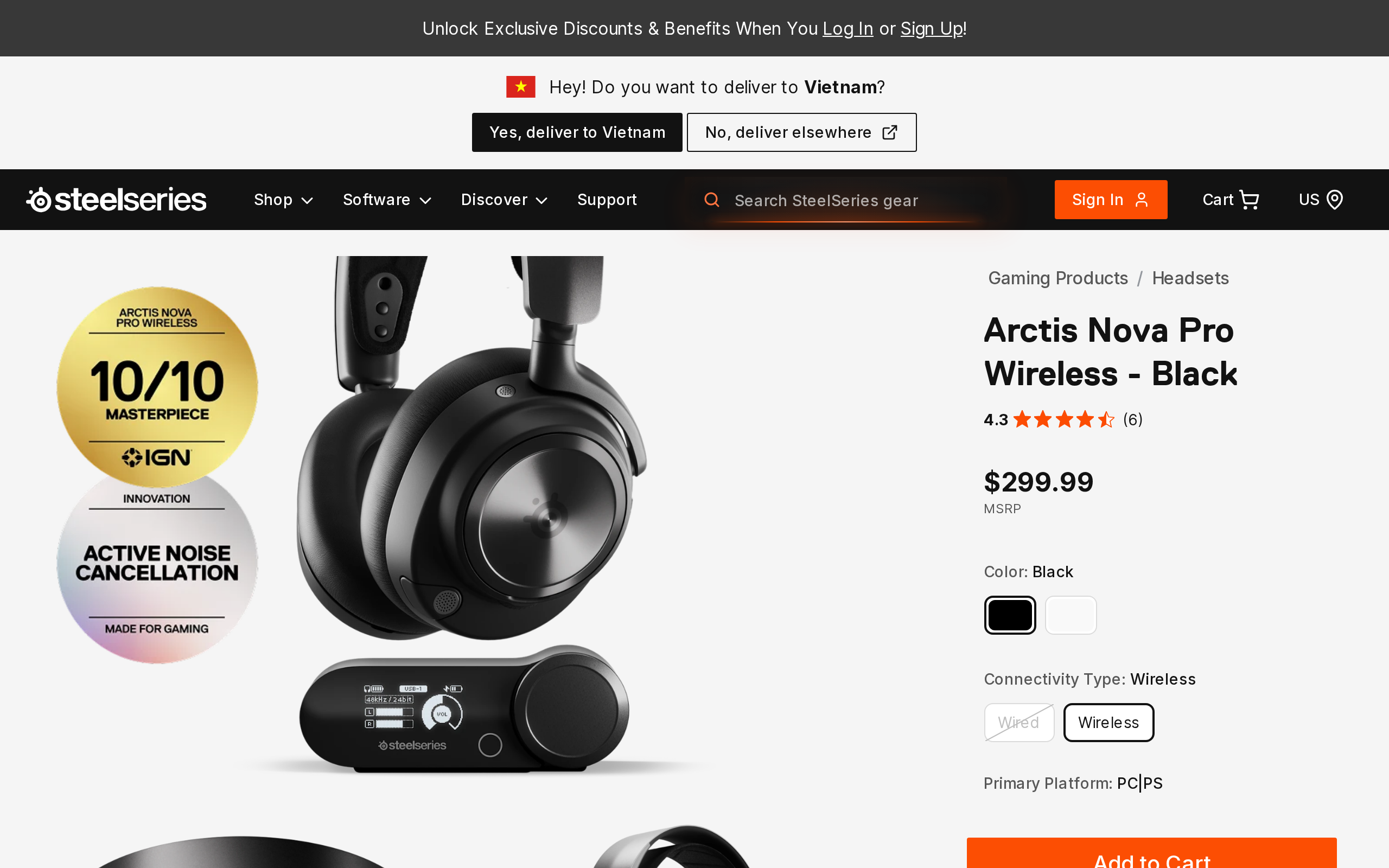
In the shooters we looked at through other people's testing, the stereo image is the selling point. One comparison in Counter-Strike 2 called footsteps and distant gunfire precise, and noted that Razer's channel matching makes enemy shots easier to locate than on the SteelSeries Arctis Nova Pro. That is the one job an esports headset has.
A mic that earns the money
The detachable HyperClear mic uses a large 12 mm capsule with a unidirectional pickup. Razer says it captures shotcalls clearly and suppresses background noise. Reviewers agree on the clarity, with one caveat: it sounds fine out of the box, and the Broadcast mode in the software gives a fuller result, but noise rejection is not the strongest. If your room is noisy, expect a keyboard clatter to bleed through a little.
For team voice chat, that is still a better result than most gaming headsets give you. For streaming, you may still want a standalone mic.
Battery life is the quiet headline
Razer quotes up to 70 hours, with a full charge taking about four hours over USB-C. Fifteen minutes on the cable gives roughly six hours of play. Reviewers who turned hybrid ANC on measured nearer 40 hours. That is still far beyond the Arctis Nova Pro's roughly 25 hours, and it means you can forget about charging for weeks.
The connectivity list is generous too: 2.4 GHz with a claimed 10 ms latency, Bluetooth, and USB. You can pair the dongle and a phone at once and double-tap the SmartSwitch button to hear both, which suits players who keep voice chat or a call on a phone while the game runs on PC or console.
Specs
- Drivers
- 50 mm TriForce Bio-Cellulose Gen-2
- Microphone
- Detachable 12 mm HyperClear Full Band, unidirectional
- Connectivity
- 2.4 GHz HyperSpeed Gen-2, Bluetooth, USB
- Latency claim
- 10 ms, per Razer
- Battery
- Up to 70 hours, about 40 with ANC (reviewer figure)
- Quick charge
- 15 minutes for roughly 6 hours of play
- Noise cancelling
- Hybrid ANC, on or off
- Spatial audio
- THX Spatial Audio 7.1.4
- EQ profiles
- Up to 9 stored on the headset
- Price
- $249.99